


SURGERY OVERVIEW
Laparoscopic Stomach Surgery
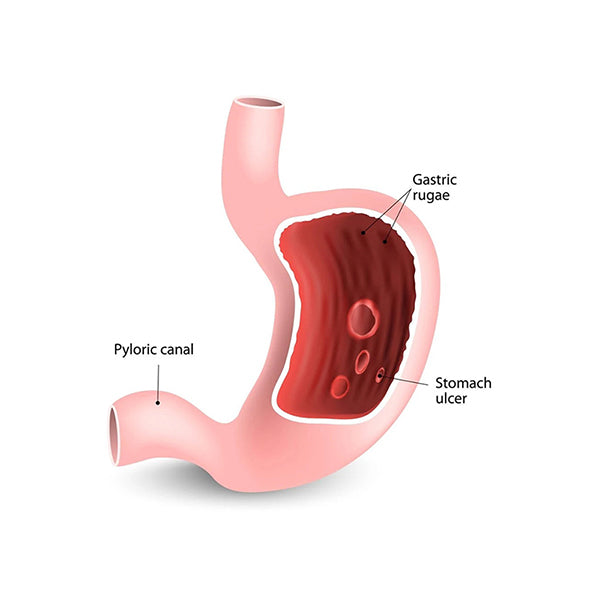
A variety of conditions can affect the stomach, including ulcers, tumors, obstructions, and dysfunction. We can:
- Treat your condition with minimally invasive robotic surgery
- Make five to six small incisions in the abdomen through which a small scope connected to a video camera and surgical tools are inserted.
- Provide you with a specialist who is considered to be one of the foremost practitioners of this kind of surgery in the medical field.
Peptic Ulcer Disease
What is Peptic Ulcer Disease?
Many patients have suffered from peptic ulcer disease. Fortunately, with advancements in medical and endoscopic therapies, most patients are able to heal without surgery. Ulcers can occur for a variety of different reasons, including:
- Too much acid production in the stomach
- Weakening of the protective lining of the stomach against acid (i.e. H. Pylori infection)
- Overuse of certain medications, particularly NSAIDs
- Malignancy
Peptic Ulcer Disease
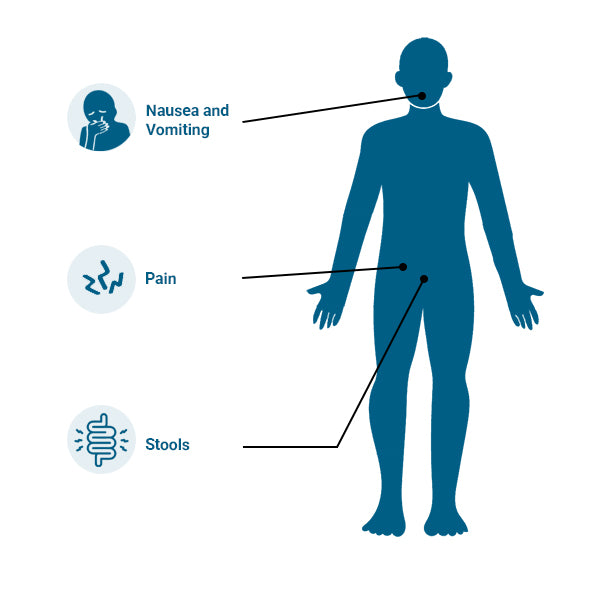
Typical Symptoms
- Nausea and Other symptoms: Feeling full after eating a small amount, bloating, belching, heartburn, nausea, vomiting, loss of appetite, or weight loss
- Pain: A dull or burning pain in the upper abdomen, between the breastbone and belly button. The pain can come and go, and may be worse after eating, between meals, or at night.
- Complications: Black or tarry stools, red or maroon blood in stools, red blood in vomit, or vomit that looks like coffee grounds. These symptoms indicate a complication and require immediate medical attention.
Peptic Ulcer Disease
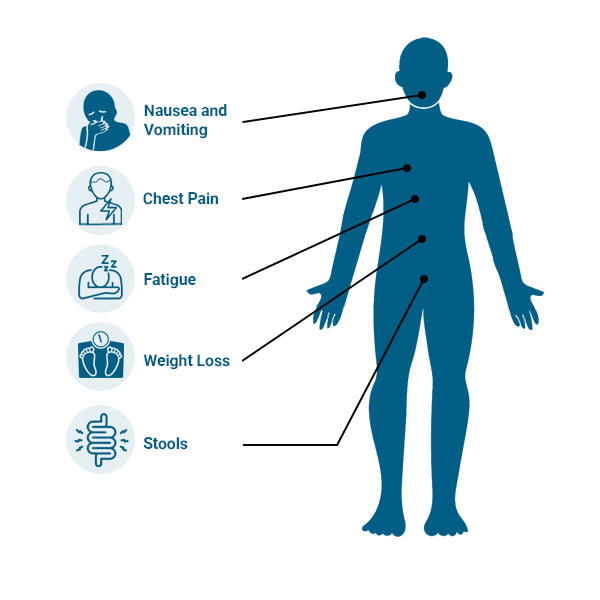
Typical Symptoms
- Vomiting
- Chest pain
- Fatigue
- Weight loss
- Bloody or dark, tarry stools
Peptic Ulcer Disease
Diagnosis
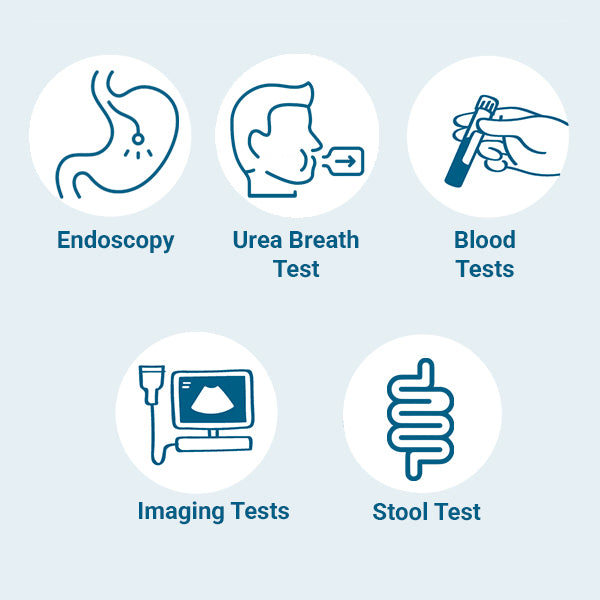
Doctors can diagnose a peptic ulcer using a variety of methods, including:
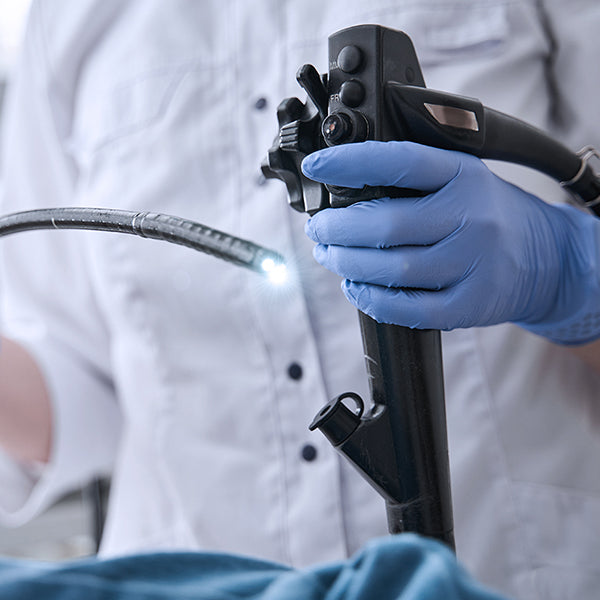
- Endoscopy: A flexible tube with a camera is inserted through the mouth and into the stomach to examine the upper gastrointestinal tract.
- Urea breath test: A urea breath test checks for the presence of H. pylori, a bacteria that converts urea into carbon dioxide.
- Blood test: A blood test can be used to help diagnose a peptic ulcer.
- Imaging tests: An upper GI X-ray series or CT scan can detect larger ulcers.
- Stool test: A stool test can be used to help diagnose a peptic ulcer.


Peptic Ulcer Disease
Treatment
Medications: A doctor will prescribe medications to reduce stomach acid and protect the ulcer:
- Antibiotics: If an H. pylori infection is present, antibiotics like amoxicillin, clarithromycin, or metronidazole can kill the bacteria.
- Proton pump inhibitors (PPIs): These drugs block the main pathways for acid production and are considered the gold standard treatment.
- H2 blockers: These medications reduce stomach acid by blocking H2 receptors.
- Antacids: These neutralize stomach acid, but they can cause side effects like diarrhea.
- Sucralfate: This medication forms a barrier over the ulcer to protect it from stomach acid.
Peptic Ulcer Disease
Peptic Ulcer Stomach Surgery
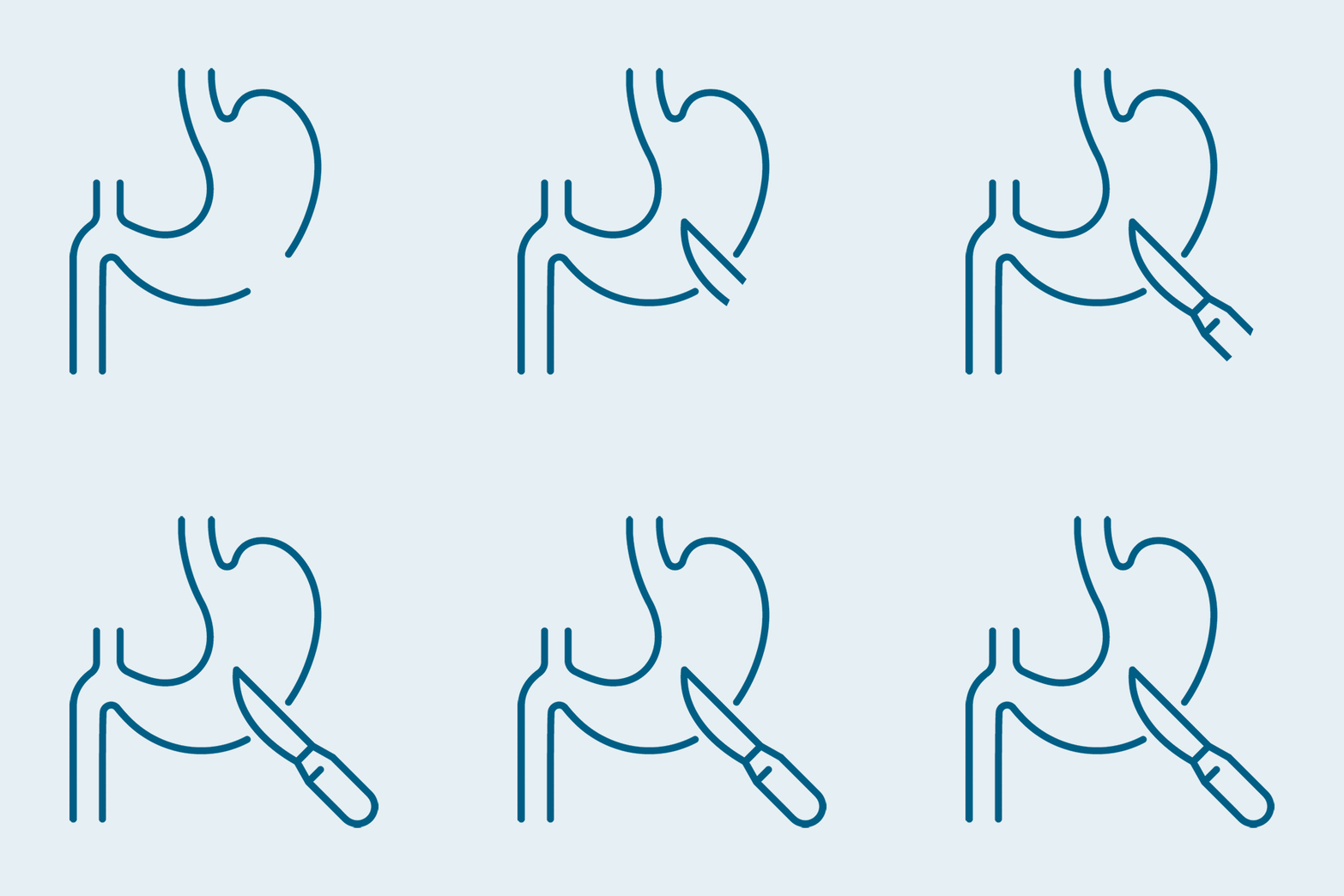
Stomach surgery for peptic ulcers is a procedure to treat bleeding, ulcers that don't heal, or ulcers that cause complications. The type of surgery depends on the patient's needs and the nature of the ulcer.
Types of stomach surgery for peptic ulcers:
- Vagotomy: Cuts the vagus nerve to reduce stomach acid production.
- Antrectomy: Removes the lower part of the stomach that produces acid-stimulating hormones.
- Partial gastrectomy: Removes part of the stomach, usually when the ulcer is large and deep.
- Pyloroplasty: Widens the opening between the stomach and duodenum to allow food to pass through.
- Graham patch: Patches a hole in the stomach.
- Roux-en-Y gastrojejunostomy: A surgical reconstruction that can improve symptoms.

Peptic Ulcer Disease
Peptic Ulcer Stomach Surgery
A variety of conditions can affect the stomach, including ulcers, tumors, obstructions, and dysfunction. Dr. Pozzessere can:
- Treat your condition with minimally invasive robotic surgery
- Make five to six small incisions in the abdomen through which a small scope connected to a video camera and surgical tools are inserted.
- Provide you with a specialist who is considered to be one of the foremost practitioners of this kind of surgery in the medical field.
